

Two rules before you mount anything
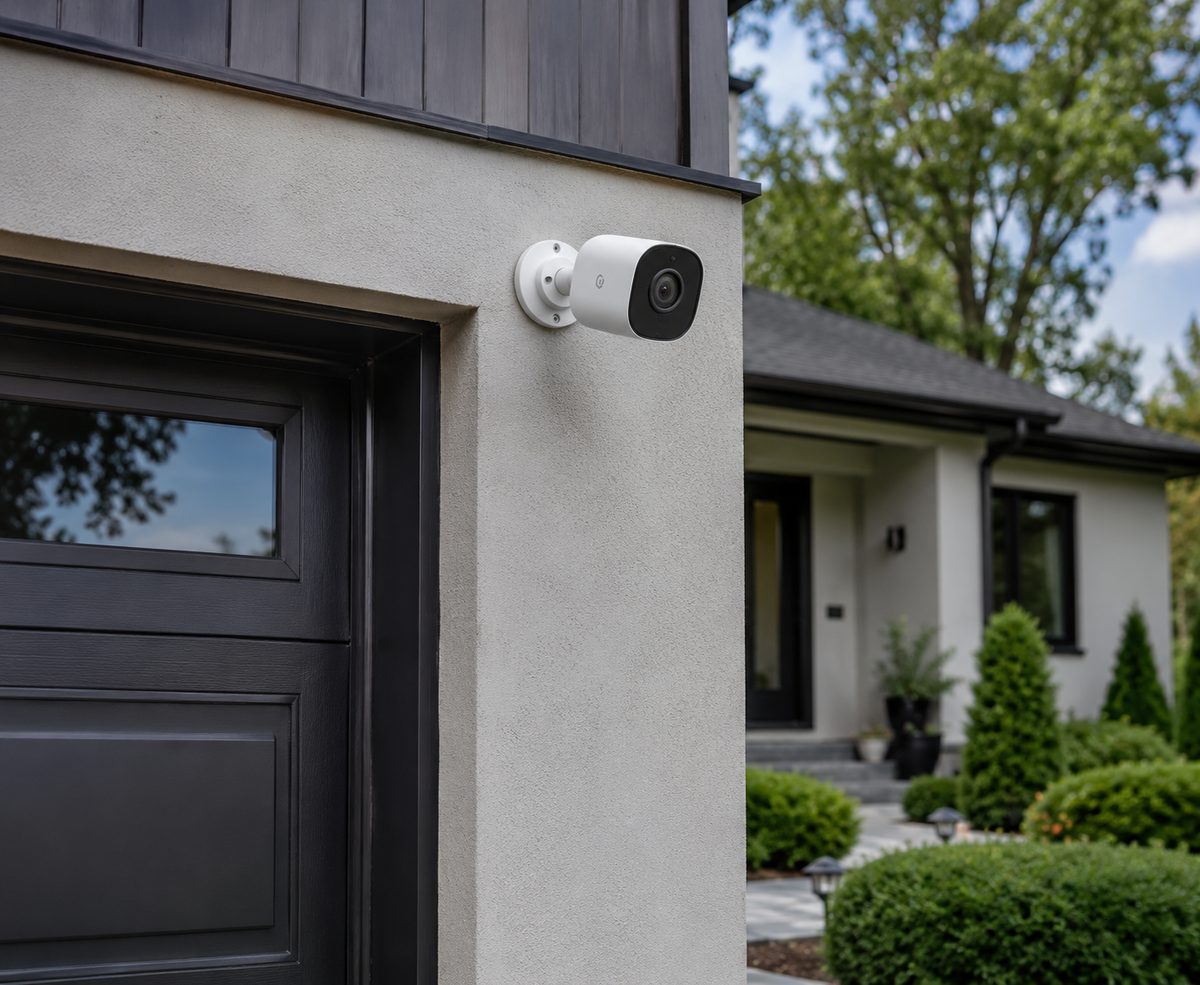
Camera placement isn't about buying more cameras — it's about covering the right spots. Two principles guide every install the providers we recommend do in your area:
1. Cover every entry point first. Most burglars enter through a front door, back door, garage, or first-floor window. Cover those before you worry about anything else.
2. Kill the blind spots. Walk your property and note where someone could approach unseen — a side gate, a fence line, a dark corner of the yard. Those gaps are exactly where cameras earn their keep.
The placement diagram
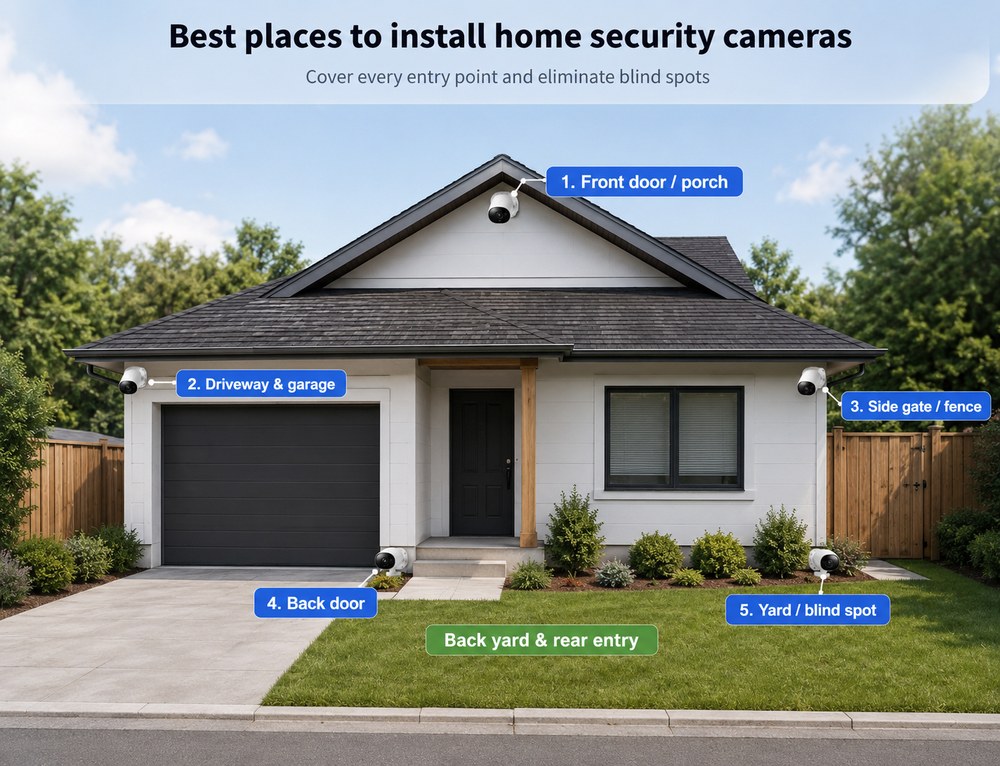
The five numbered positions above cover the vast majority of real-world break-in paths. Let's walk through each.
Not sure which system you need?
Answer a few quick questions and we'll match you with a top-rated provider for a free, no-obligation quote — or compare our top picks yourself.
The five priority positions
- Front door / porch. Your highest-traffic entry and where package thefts happen. A video doorbell plus an overhead camera covers faces and the approach.
- Driveway & garage. Catches vehicles, the garage door (a favorite entry), and anyone circling the house.
- Side gate / fence line. The quiet path to the back of the house. A camera here removes a burglar's favorite unseen approach.
- Back door. Out of street view and therefore a top target. Never leave it uncovered.
- Yard & blind spots. Any corner someone could use to stage or hide. One well-placed camera often covers the whole gap.
Common placement mistakes
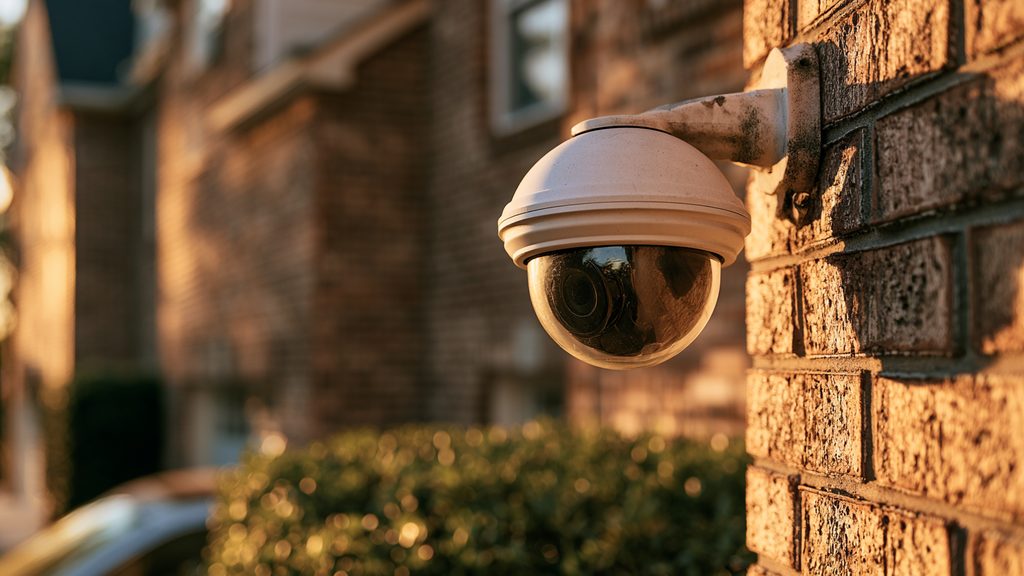
Even good cameras fail when they're mounted wrong. The ones we fix most often:
- Aiming into the sun or at a bright window, which blows out the image at exactly the wrong time of day.
- Mounting too high, so you capture the top of a head instead of a face. Eight to ten feet is the sweet spot.
- Forgetting the second story where a porch roof or ladder gives access to upper windows.
- Ignoring indoor coverage — one interior camera at a main hallway is a valuable backstop if someone gets past the exterior.
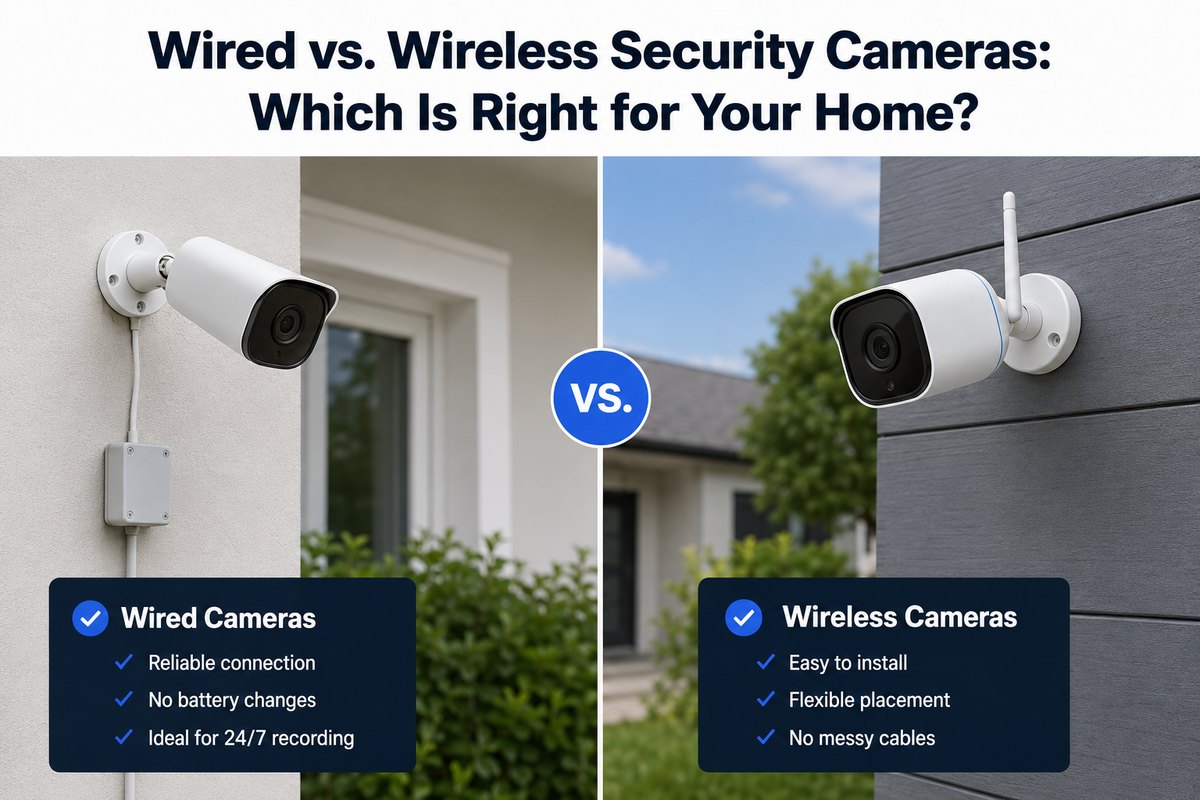
Wired or wireless changes how easy each of these spots is to reach — our wired vs. wireless guide helps you match the camera type to the location.
Get your angles mapped for free
Every home is different, and a diagram can only take you so far. When a licensed installer do a free assessment, mapping camera angles to your specific entry points and blind spots is the core of the visit. We'll also flag anything a generic guide can't see from a floor plan.
Curious how covered you already are? The Home Security Score quiz gives you a fast read, and our best cameras guide can close whatever gaps it finds.
Security camera placement FAQs
What are the best places for security cameras?
The highest-value positions are the front door, the back or side door, the driveway or garage, the main ground-floor windows, and any secluded approach where someone could work unseen. Most break-ins happen at a door, so covering every entry point beats adding more cameras to one already-covered side of the house.
Where should you put security cameras outside?
Mount outdoor cameras high on a corner - roughly 8 to 10 feet up - angled down toward the approach. Corners work because one camera covers two sides of the house. High mounting also keeps the camera out of easy reach while still capturing faces rather than the tops of heads.
Where should you not put security cameras?
Avoid pointing cameras directly at bright sky or a light source, which silhouettes anyone in frame. Skip neighbours' windows and private areas of their property. And don't put cameras inside bathrooms or bedrooms - beyond the privacy issue, it's the kind of footage you'd least want exposed if an account were ever compromised.
How many security cameras do you need?
Most homes are well covered by three to five: front door, back door, driveway, and one or two covering the remaining approaches. Coverage of every entry point matters far more than the total count.
Should cameras be visible or hidden?
Visible, in most cases. A camera someone can see is a deterrent before anything happens, which is a better outcome than good footage of an incident that already occurred. Mount it high enough that it can't simply be pulled down.