
Choosing a home security system
A home security system is one of those purchases you really shouldn't rush into — there's a lot to unpack. Between hundreds of brands, different monitoring tiers, and a wide range of components, narrowing it all down can feel overwhelming. It's the kind of decision researchers call "choice overload".1
That's exactly why we put this guide together. Think of us as your go-to experts cutting through the noise so you can find the right fit for your home. Every recommendation here is backed by our research team, which compares every major security system on the market. Let's get into it.
Before comparing brands, it helps to answer three questions: do you own or rent, do you want to install it yourself or have it done professionally, and do you want professional monitoring? Your answers narrow the field fast — and they're the same questions our free matching quiz asks.
Professional vs. DIY systems
The first big fork is who installs and manages the system. DIY systems (like SimpliSafe or Ring) are wireless, peel-and-stick, and set up in an afternoon — ideal for renters and smaller homes. Professional systems (like Vivint or ADT) are installed and configured for you, which removes the guesswork of sensor and camera placement.
Neither is objectively "better" — it depends on your comfort level and home. If you have multiple entry points, a yard, or want a fully integrated smart home, professional install pays off. If you're budget-focused and handy, DIY wins on price.
Editorial Note — CompareYourSecurity Editorial Team
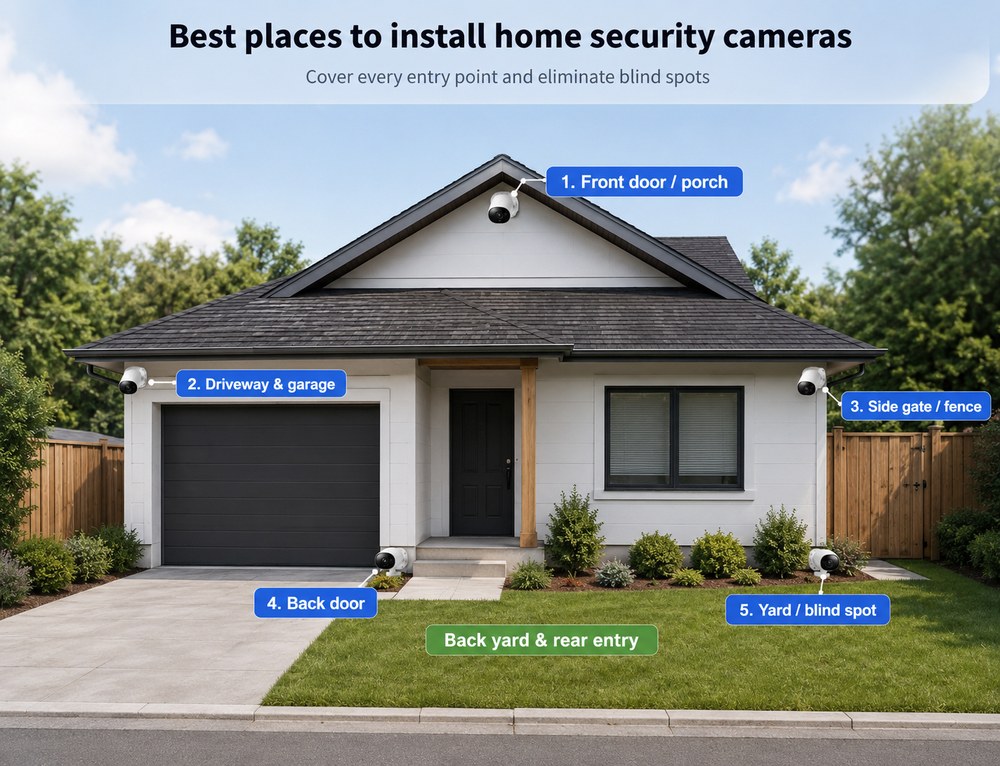
The most common DIY mistake we see is placement — a camera mounted too high or a sensor missed on a garage side door. If you go DIY, follow our camera-placement guide carefully.
Monitoring: self vs. professional
Monitoring is how your system responds when a sensor trips. With self-monitoring (often free), you get a phone alert and decide what to do. With professional monitoring ($20–$60/month), a monitoring center watches 24/7 and dispatches police, fire or medical — even when you're asleep or away.
For travelers, people who live alone, or anyone who silences their phone, professional monitoring is the safer choice. Look for a plan with cellular backup so the alarm still reports if your Wi-Fi drops, and prefer no-contract options so you can adjust as your needs change.
Response times and how dispatch works
When an alarm triggers, the monitoring center first tries to verify it (a call or app notification) to reduce false alarms, then contacts emergency services. Top providers advertise response initiation in well under a minute. Ask any provider for their average verification-to-dispatch time, and check whether your area charges false-alarm fines after repeat trips — many municipalities do.
Heads Up
Repeated false alarms can trigger municipal fines. Good systems use entry delays and pet-immune sensors to keep you out of that territory.
The homeowners-insurance discount
Here's a benefit many buyers miss: a monitored security system can lower your homeowners-insurance premium. Many U.S. insurers offer discounts of roughly 5–20% for a professionally monitored system, which can partly (or fully) offset the monthly monitoring fee. Ask your insurer what documentation they need — usually a monitoring certificate from your provider.
Equipment, explained
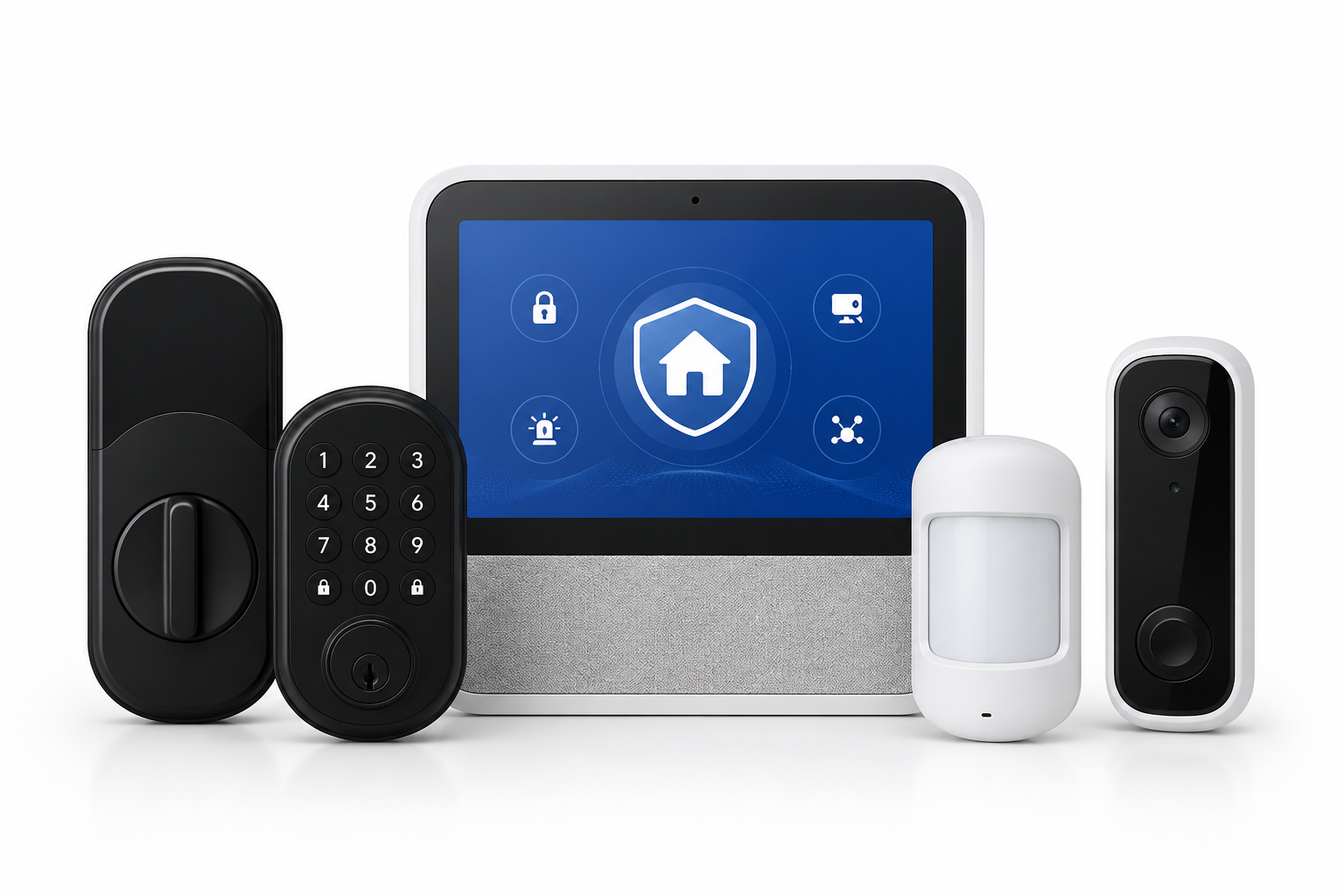
Most systems are built from the same building blocks. You don't need all of them — just the ones that cover your home's weak points:
- Control panel / hub — the brain that connects everything.
- Door & window sensors — the first line of detection at entry points.
- Motion sensors — cover interior spaces; get pet-immune versions if you have animals.
- Cameras & video doorbells — deter, record and let you see who's there.
- Smart locks & keypads — keyless entry and remote control.
- Environmental sensors — smoke, CO and flood detection.
Key features to look for
Beyond the basics, the features that matter most in 2026 are: a reliable, fast app; cellular + battery backup; smart-home integration (Alexa, Google, Apple Home); two-way audio on cameras; and clear video with useful (not annoying) motion alerts. Nice-to-haves include facial recognition, package detection and geofencing that arms the system when you leave.
What a home security system costs
Expect $300–$1,500 up front for equipment and installation, plus $20–$60/month for professional monitoring. DIY keeps upfront costs lowest; professional install and premium smart-home gear push it higher. Want a personalized estimate? Try our free home security cost calculator, and read the full breakdown in our 2026 cost guide.
Installation
DIY installation is genuinely doable — most kits go up in one to three hours with an app walking you through it. The two things people get wrong are camera height (aim for 8–10 ft, angled slightly down) and forgetting a secondary entry like a garage side door. Professional installation removes that risk and is worth it for larger or wired systems.
The best home security companies
After our research, these are our top three overall picks for 2026. See the full breakdown, specs and pros/cons on our best home security systems page.
Prefer a shortcut? Get matched free and we'll recommend the best fit for your home and current deals.
Summary: the bottom line
The best home security system is the one that fits your home's real weak points and your comfort with DIY — not the biggest package a salesperson can upsell. Decide own-vs-rent, DIY-vs-pro and monitoring first, cover your entry points before adding extras, and favor no-contract providers. Do that and you'll get strong protection without overpaying.