Renting doesn’t mean going unprotected. Modern wireless systems install with adhesive strips instead of drills, move with you at lease-end, and need no permanent changes a landlord could object to. This guide covers what makes a system renter-friendly, what your lease does and doesn’t allow, and the setups that work best in apartments and rental houses.
What makes a security system renter-friendly
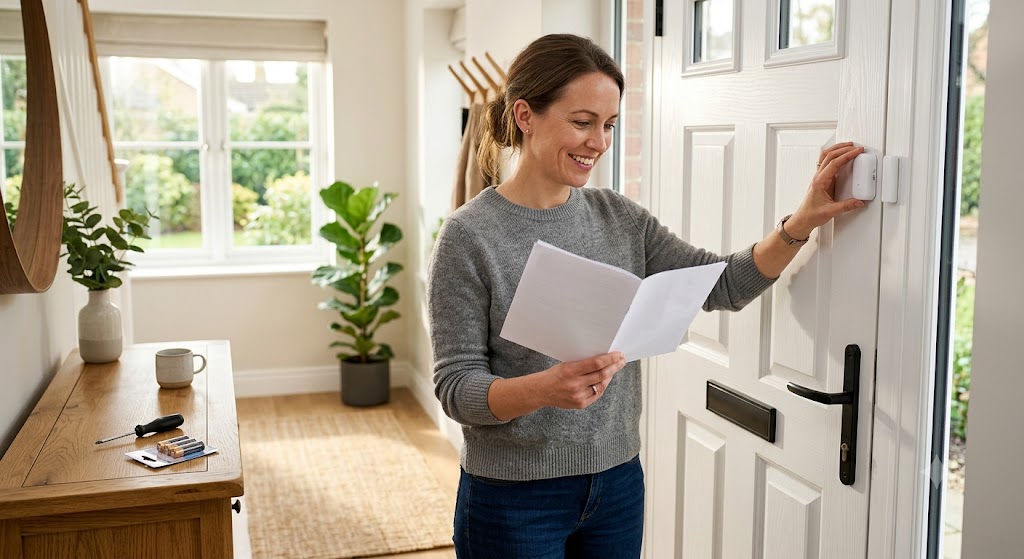
- Peel-and-stick installation. Door/window sensors, motion detectors, keypads and even indoor cameras mount with removable adhesive — no holes, no patching, full deposit back.
- Wireless everything. No cables through walls means nothing your lease can call an “alteration” in most cases.
- No long contract. Leases end; a 36-month monitoring contract shouldn’t outlive your address. No-contract monitoring (or self-monitoring at $0/month) fits renting better.
- Portability. The whole kit packs into a box and re-sticks at the next place in under an hour.
The best renter setups in 2026
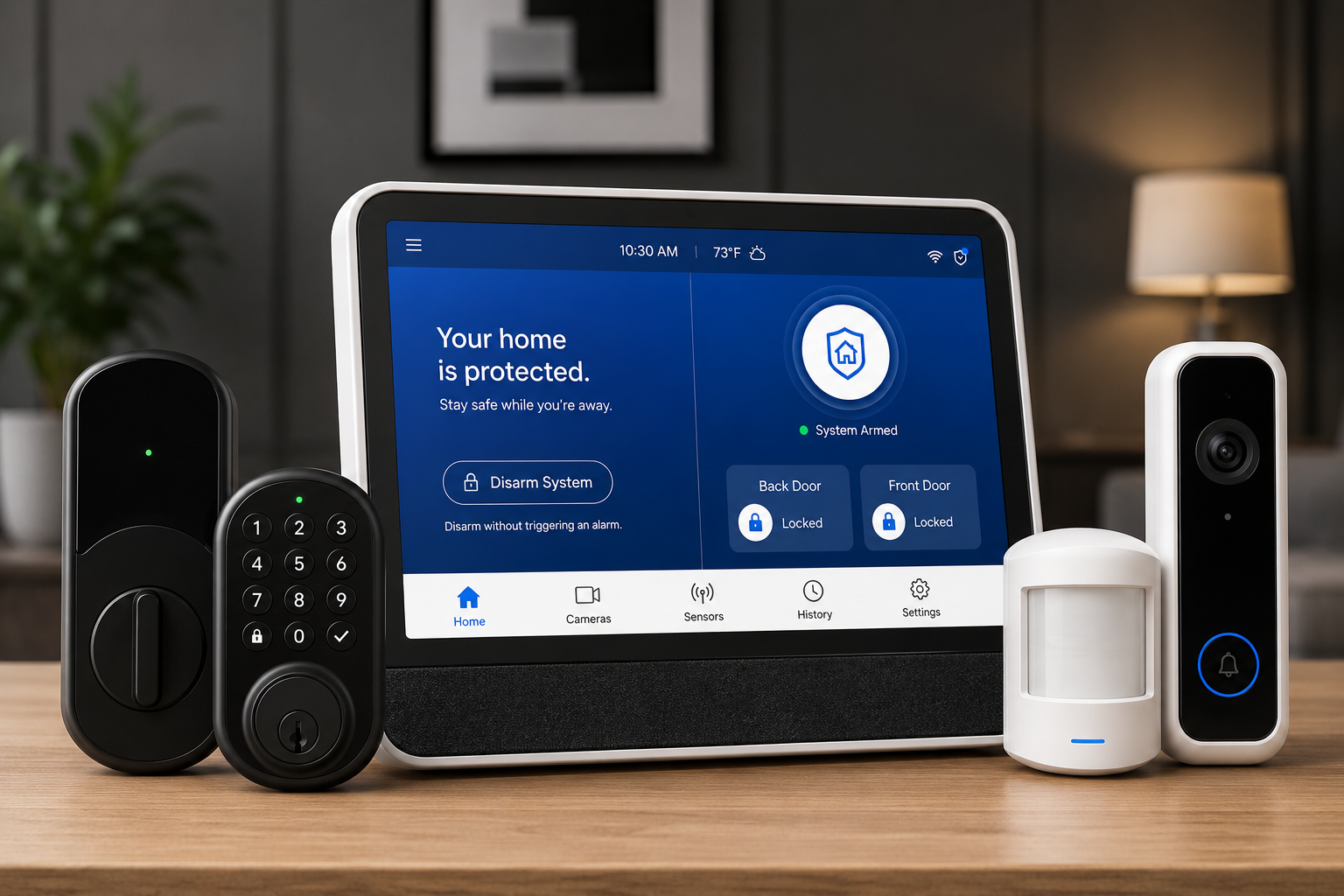
SimpliSafe is the classic renter pick: peel-and-stick sensors, optional no-contract professional monitoring around $20–$30/month, and easy to expand room by room. Ring Alarm is the budget alarm-plus-doorbell route, especially if package theft is your main worry. Eufy wins if you want cameras with no subscription at all — recordings stay on its local hub. Compare all three in our best wireless home security systems ranking, or see the no-monthly-fee options if $0/month is the goal.
What your lease actually allows
Rules vary by lease and by state, so read yours first — but the general pattern is consistent: inside your own unit, damage-free devices are almost never a problem. Adhesive sensors and freestanding cameras don’t alter the property. The friction points are drilling into walls or door frames, anything mounted in shared hallways, and video doorbells that replace existing hardware — those usually need written landlord permission. When in doubt, ask in writing; many landlords say yes because a protected unit protects their property too.
One boundary matters everywhere: cameras belong in and around your own space, never pointed into a neighbor’s window or covering shared areas beyond your own door.
Renters insurance angle
Some renters insurance policies discount premiums for protective devices — and even where the discount is small, documented security can matter after a theft claim. Ask your insurer what qualifies; professionally monitored systems typically count for more than self-monitored ones.
Apartment vs. rental house
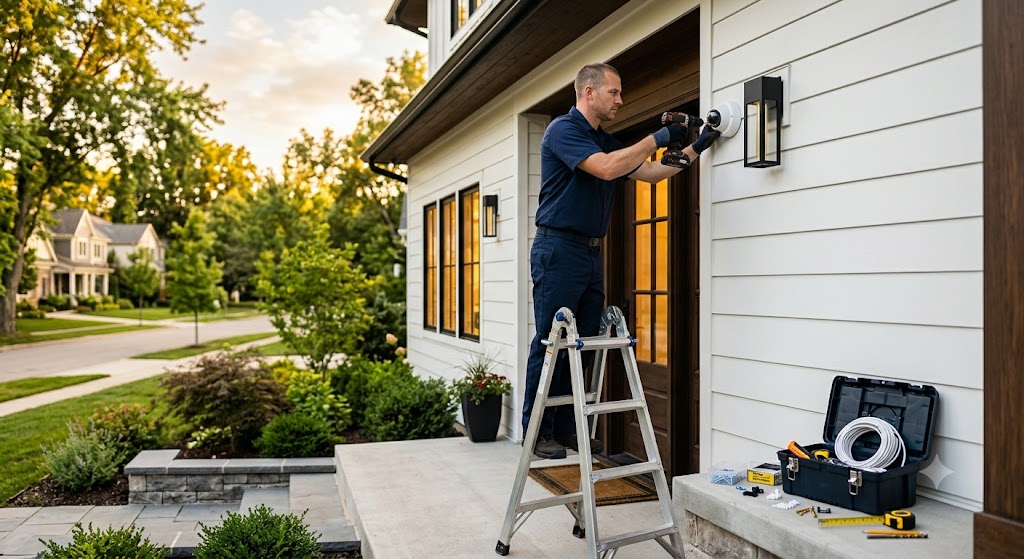
Apartments concentrate risk at one point: the front door (plus ground-floor windows and package deliveries). A small kit — one door sensor, one motion sensor, maybe an indoor camera — covers most units; our apartment security guide sizes kits by layout. Rental houses need more: every exterior door, ground-floor windows, and ideally a camera at the main entry. And if you can’t drill anywhere at all, see our no-drill security guide for damage-free mounting tricks and their honest limits.