

The short answer
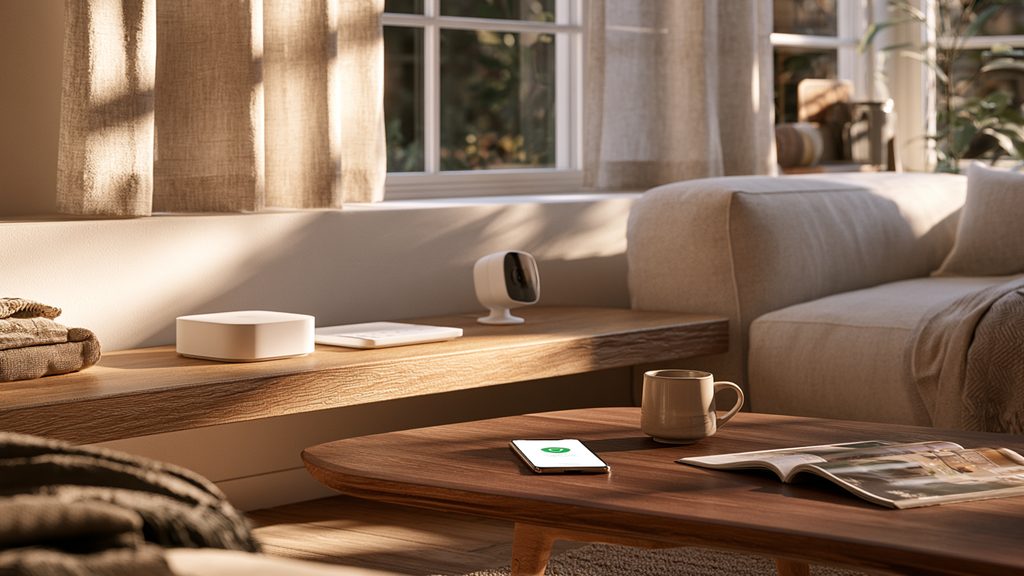
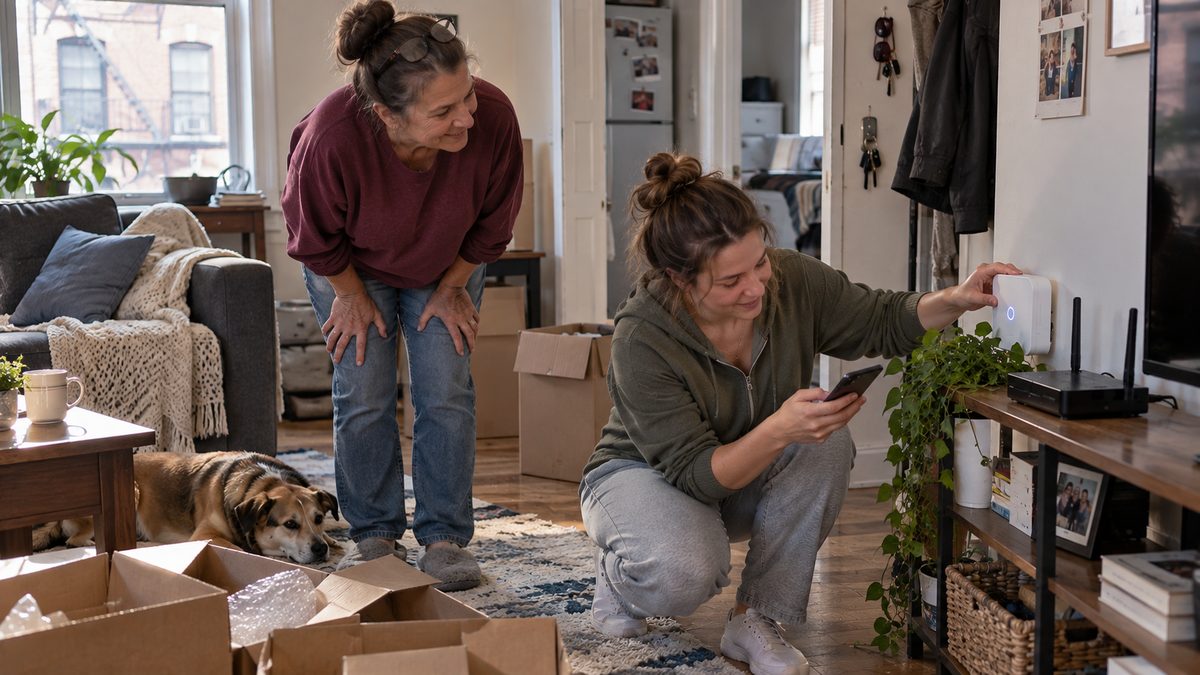
The best apartment security system for a renter is a fully wireless, no-contract kit you can install without drilling and take with you when you move. That rules out hardwired, professionally installed systems and points you at battery-powered alarm kits (SimpliSafe, Ring, Abode and Cove are the usual names), a wireless door camera or video doorbell, and a few adhesive door and window sensors. None of it needs your landlord's permission, and all of it comes down cleanly at move-out so your deposit is safe.
Below we cover the best apartment security systems for renters, the best standalone security devices if you don't want a full system, exactly what apartment security camera laws let tenants do, and how to prevent the ground-floor and shared-hallway break-ins apartments are prone to.
The best apartment security systems for renters
An alarm system for apartment renters should tick four boxes: 100% wireless, no long-term contract, adhesive or freestanding mounting, and portable when you move. A few systems built exactly for that:
- SimpliSafe - fully wireless, peel-and-stick sensors, and month-to-month professional monitoring with no contract (around $20/month at the time of writing, or you can self-monitor for free). It's the setup most renters land on because the whole kit packs into a box on moving day.
- Ring Alarm - installs in well under half an hour with no drilling, has battery backup, works with Alexa, and pairs neatly with a Ring video doorbell. Self-monitoring is free; professional monitoring is optional. Best if you're already in Amazon's ecosystem.
- Abode and Cove - two more wireless, no-contract kits with on-demand monitoring you can turn on and off month to month, which suits a lease that might end in six months.
We keep detailed, independent rankings in our best wireless security systems and most affordable security systems guides - both are effectively apartment shortlists, since wireless and affordable is exactly what a rental needs. If you want a recommendation tailored to your specific unit, take the Home Security Score quiz or book a free assessment and we'll only suggest gear you can take with you.
Not sure which system you need?
Answer a few quick questions and we'll match you with a top-rated provider for a free, no-obligation quote — or compare our top picks yourself.
Best apartment security devices (no drilling required)
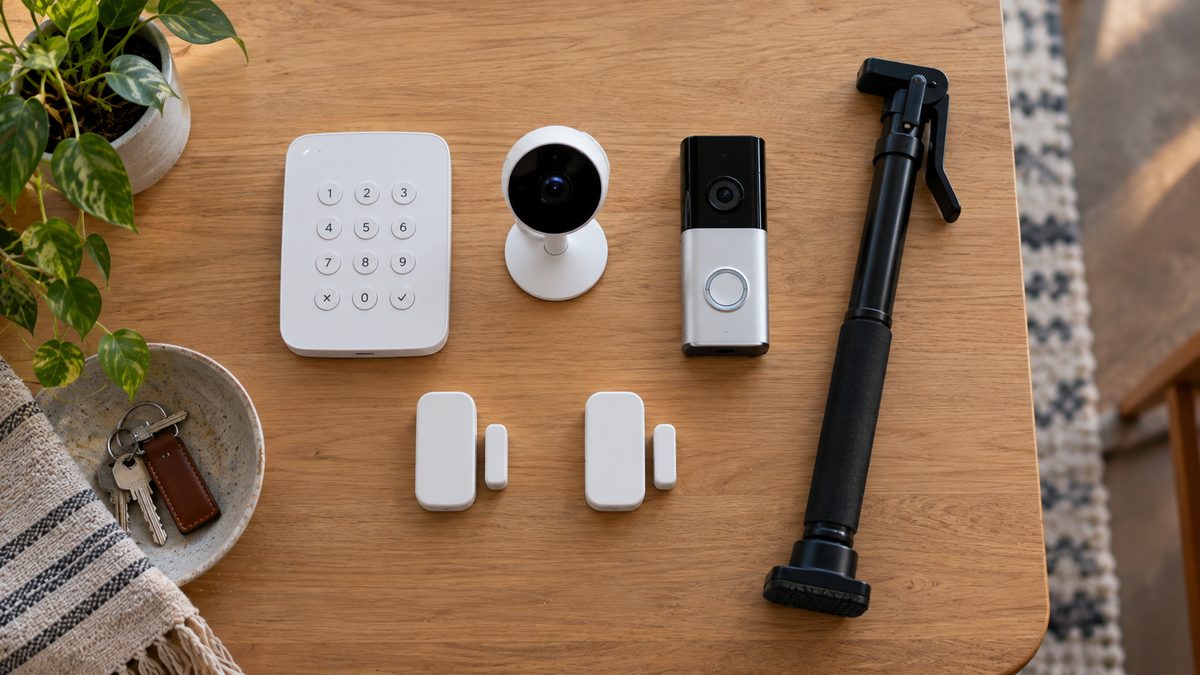
If you don't want a full system, these standalone devices are the best apartment security buys - every one mounts with adhesive or sits on a shelf, and every one leaves with you:
- Wireless door camera or video doorbell - some clip over an existing peephole or mount with adhesive, so you see who's at the door without touching the frame.
- Battery door and window sensors - the core of any apartment alarm; they chime or push an alert the moment an entry point opens.
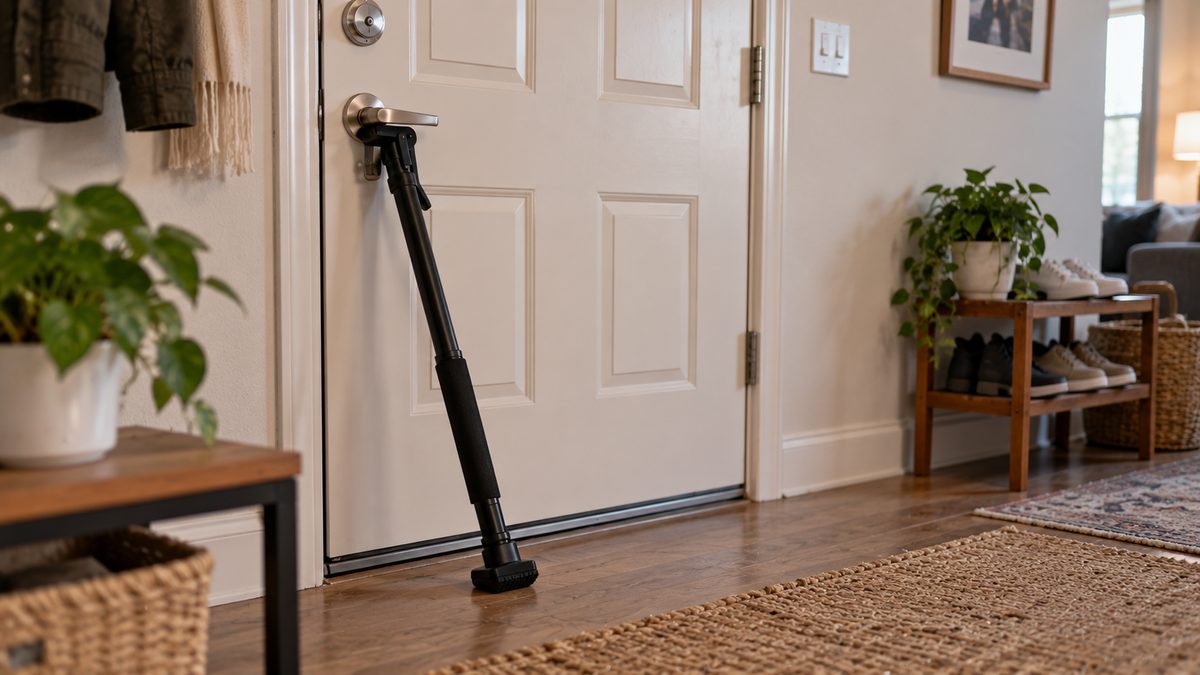
- A portable door alarm or door security bar - a jammer bar or wedge alarm braces the door from the inside, which matters in older buildings with weak strike plates.
- An indoor camera on a bookshelf covering the main entry - the one camera that catches anyone who actually gets in.
- Smart plugs and lights on timers to simulate occupancy when you're travelling.
- An over-the-deadbolt smart lock (the kind that fits over the existing thumb-turn) if your lease allows it - no lock replacement, so no landlord conversation.
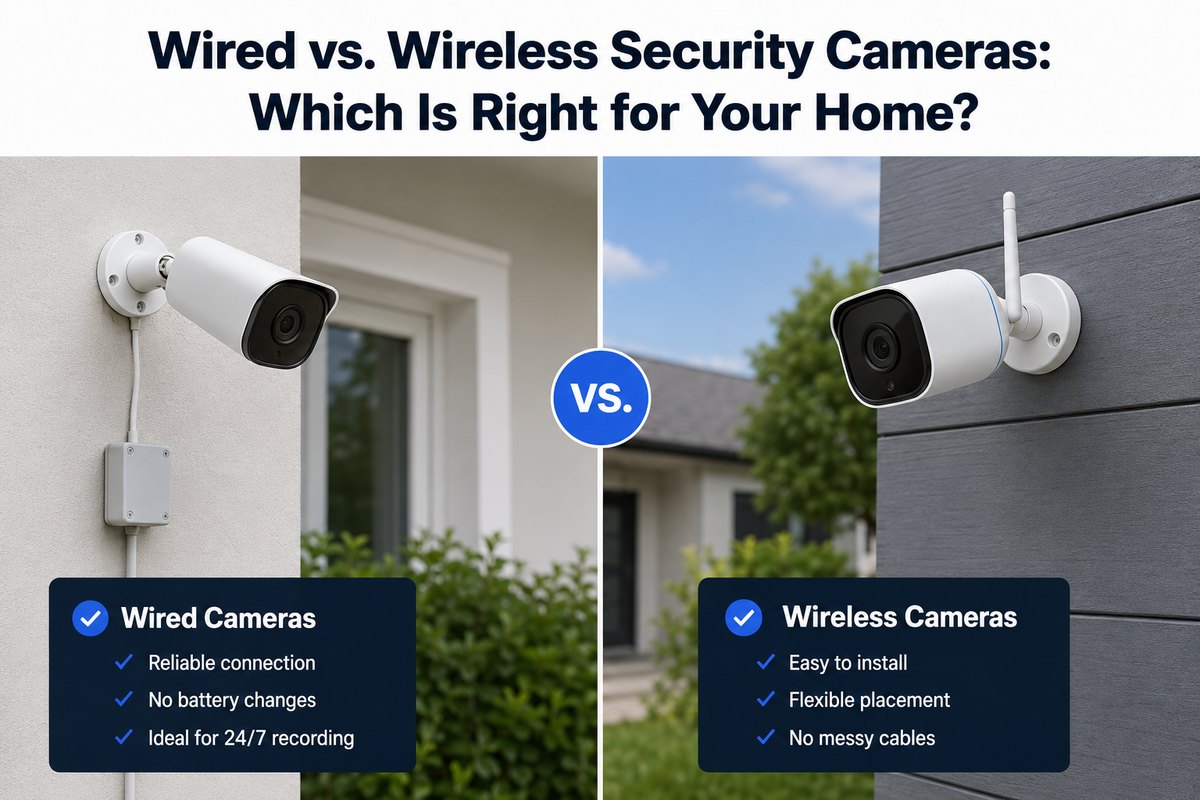
Because it's all wireless and battery-powered, this is the same damage-free gear we compare in our wired vs. wireless guide - for renters, wireless wins almost every time.
Apartment security camera laws for tenants
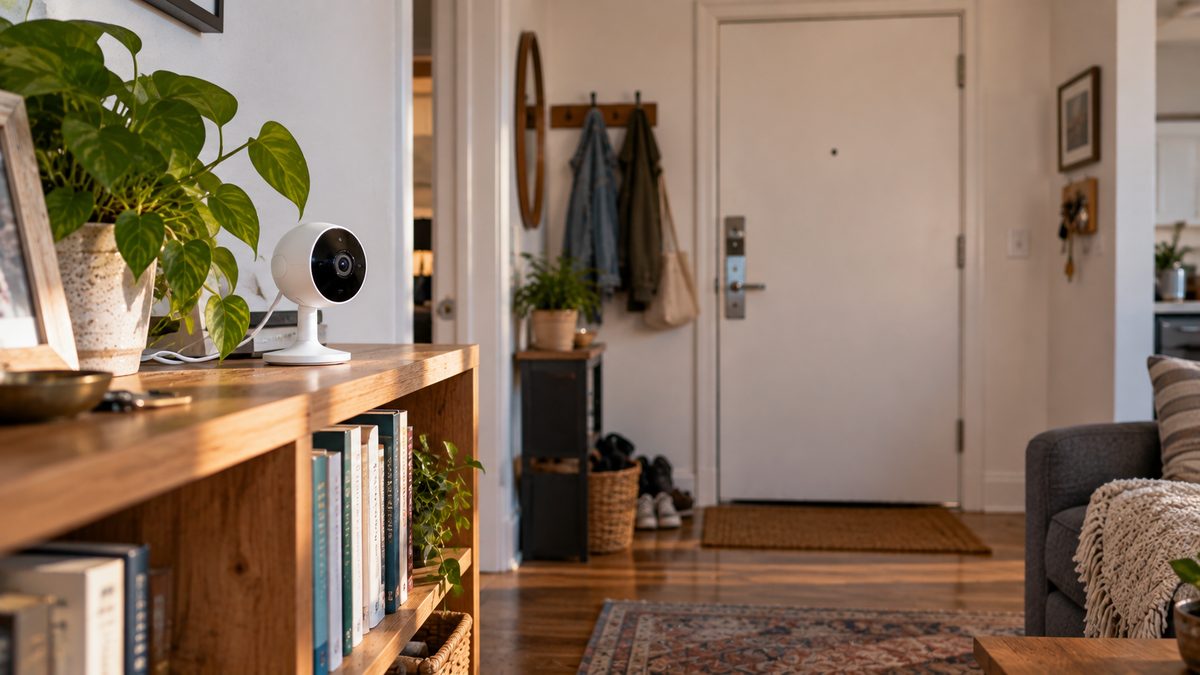
Tenants have real rights here, but there are limits. As a general rule across the U.S., you can install security cameras inside your own unit - that's your private, rented space. Where it gets restricted is anything pointed outward or placed in shared space:
- Common areas are the landlord's domain. Hallways, lobbies, laundry rooms, garages and stairwells are usually off-limits for tenant-installed cameras without written permission from property management.
- Don't record where people expect privacy. A doorbell or hallway camera should cover your own doorway, not a neighbor's entrance, their window, or a shared space where residents reasonably expect not to be filmed.
- Audio is stricter than video. Roughly a dozen states have "all-party consent" laws - including California, Florida, Illinois, Maryland, Massachusetts, Pennsylvania and Washington - where recording a conversation without everyone's consent can be illegal, even inside your own unit if guests are present. Video-only is the safer default in any shared area.
- Check your lease. Many buildings spell out camera rules in the lease or house rules, and violating them can mean fines or, in the worst case, eviction.
The safe path for a renter: keep cameras inside your unit or aimed only at your own entry, disable audio recording in shared spaces, and get written approval before mounting anything in a hallway or on a building exterior.
Do apartment complexes have cameras?
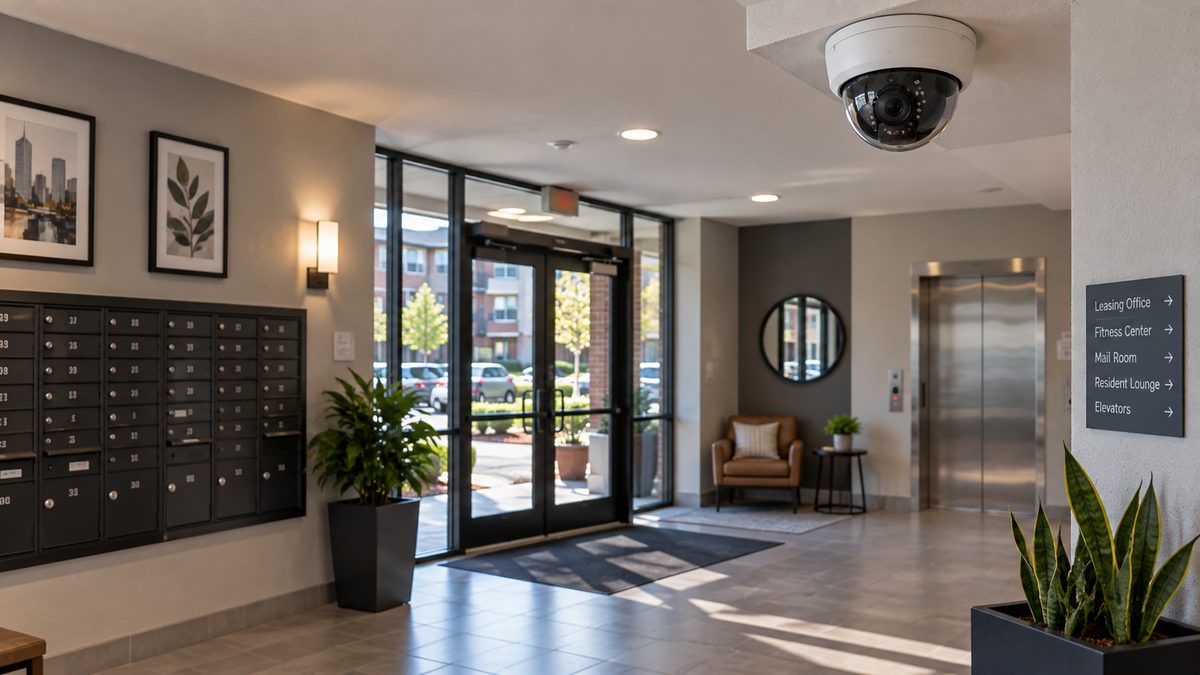
Many do - but far fewer than tenants assume, and rarely everywhere. Most complexes that use cameras put them in common and high-traffic areas: entrances, parking lots and garages, leasing offices, mail rooms and elevators. They typically do not cover the hallway outside your specific door, and they almost never cover inside your unit.
A few things worth knowing as a renter:
- Landlords who install surveillance are generally expected to disclose it to residents, so if there are cameras, they usually aren't a secret.
- Building cameras protect the property, not your belongings - footage may or may not be shared with you after an incident, and it may not cover the spot where something happened.
- That gap is exactly why your own entry camera and door sensors matter: they cover the one area building cameras miss - your front door.
If security is thin in your building, that's a signal to add your own layer rather than rely on the complex. Our signs your area needs better security guide covers how to read the warning signs.
How to prevent apartment break-ins: theft prevention and safety tips
Apartments have their own risk profile - ground-floor units, sliding patio doors, and shared entryways that let a stranger get close unseen. A handful of safety habits for apartment residents cut the risk of break-ins and theft dramatically:
- Reinforce the front door. Most apartment break-ins are simple forced entry through the main door. A door security bar, a reinforced strike area, and a door/window sensor that alarms on entry are the highest-value fixes.
- Secure sliding and patio doors. A dowel or bar in the track stops a slider from being lifted or forced - cheap, removable, and very effective on ground floors.
- Don't rely on the peephole alone. A video doorbell lets you see and speak to whoever's there without opening up, which also deters package theft in shared hallways.
- Make the unit look lived-in. Smart lights on timers when you travel remove the "empty apartment" signal thieves look for.
- Lock up on the way out - every time. A surprising share of apartment thefts are through unlocked doors and windows, not forced entry.
Layered simply: see the door (video doorbell), hear the entry (door sensor + alarm), and look occupied (smart lights). That covers the three things that actually stop an apartment break-in.
Apartment security ideas: a simple starter setup
If you want a no-fuss plan that fits any rental: start with a video doorbell or door camera, add one indoor camera covering the main entry, put door/window sensors on the front door and any reachable window, and set a couple of smart lights on timers. Add month-to-month monitoring only if you travel or live alone - and only the kind with no long-term contract, so it ends when your lease does.
Want a setup tailored to your unit and building? Take the Home Security Score quiz or book a free assessment - we'll suggest a renter-friendly kit, factor in your floor and entry points, and never push gear you can't take with you. You can also call us at (888) 207-7106.
Frequently asked questions
What is the best security system for an apartment renter?
A fully wireless, no-contract kit like SimpliSafe, Ring Alarm, Abode or Cove. All four install without drilling, run on battery-backed sensors, offer month-to-month monitoring you can start or stop with your lease, and pack up to move with you. See our independent best wireless security systems ranking for the full comparison.
Do I need my landlord's permission to install an apartment alarm system?
For a wireless, adhesive-mounted system - almost never. Peel-and-stick sensors, freestanding cameras and a plug-in hub don't alter the unit, so no permission is needed. You only need written approval for anything that modifies fixed hardware, like replacing the deadbolt or drilling the door frame.
Is it legal to put a security camera outside your apartment?
Inside your own unit, yes. Outside your door or in shared hallways it's restricted - those are common areas the landlord controls, and you generally need written permission. Wherever you place a camera, aim it only at your own entry (not a neighbor's door) and avoid audio recording in shared spaces, since many states require all-party consent.
Can my landlord stop me from installing a security camera?
Inside your rented unit, usually not - though your lease can set rules. In common areas like hallways and lobbies, yes: those are the landlord's space, and installing there without approval can breach your lease. Keep cameras inside your unit or on your own entry and you're on safe ground almost everywhere.
Do apartment complexes have cameras?
Many cover common areas - entrances, parking, garages, mail rooms and elevators - but rarely the hallway outside your specific door, and never inside your unit. Landlords are generally expected to disclose surveillance, and building footage protects the property, not your belongings, which is why your own door camera still matters.
Are peepholes required in apartments?
It varies by state and local housing code rather than a single national rule - some jurisdictions require a peephole or viewer on entry doors, many don't. Regardless of the requirement, a wireless video doorbell gives you a far better view than a peephole and lets you see and speak to visitors without opening the door.
How do I prevent a break-in in a ground-floor apartment?
Ground-floor units need extra attention on the door and any patio slider. Add a door security bar and an entry sensor that alarms, put a dowel or bar in the sliding-door track, use a video doorbell so you never open blind, and run smart lights on timers when you're away. Simple, removable, and renter-safe.
This guide is general information, not legal advice. Camera and tenant laws vary by state and by lease - check your local rules and lease terms before installing anything permanent.