

The short answer
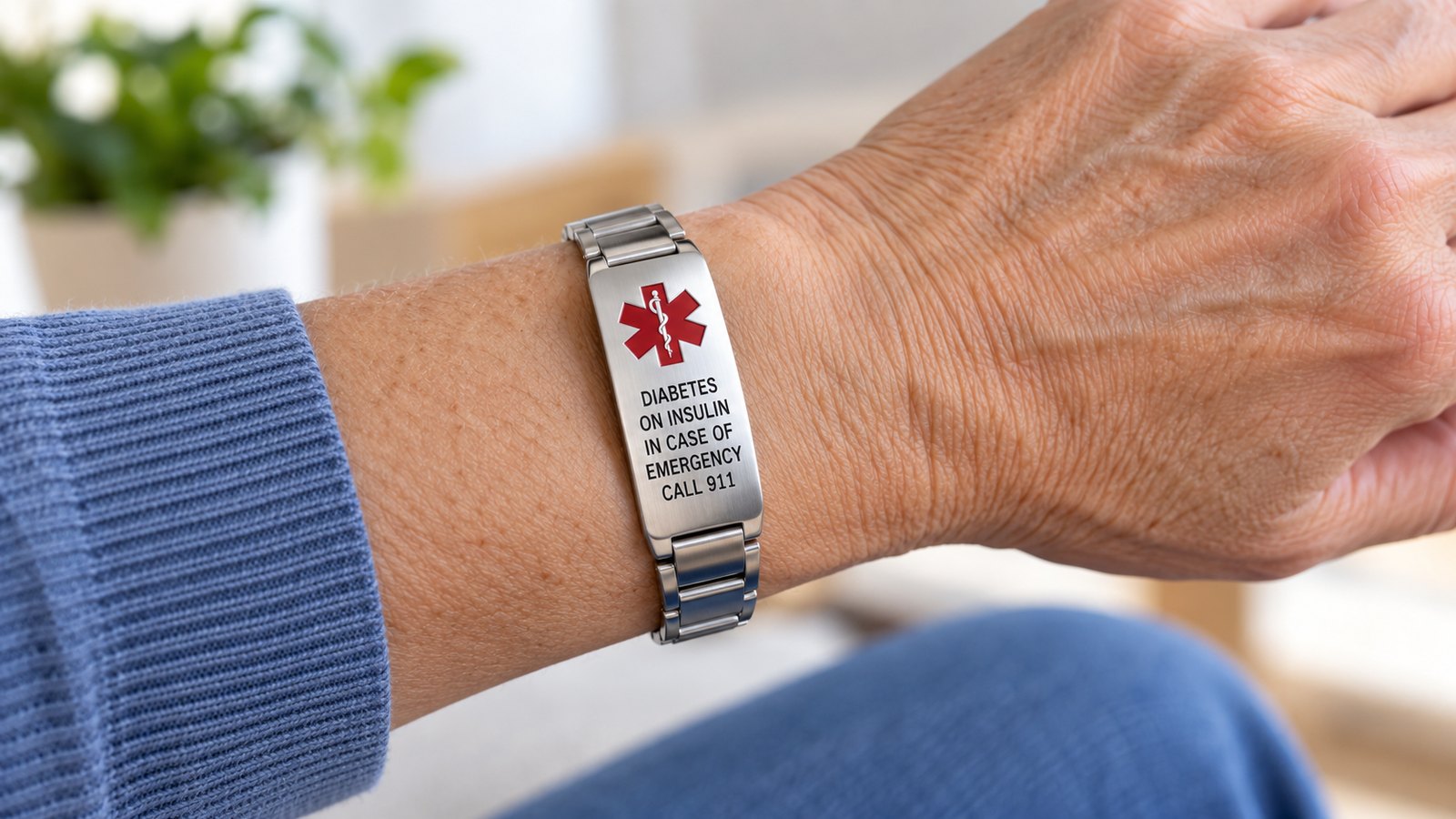
A medical alert bracelet should carry only the essentials a first responder needs in seconds: your full name, your most important medical condition, any life-threatening allergies, critical medications, and an emergency contact number. Space is limited, so engrave what changes emergency treatment - not your whole history.
Here's the exact information to include, what to add for specific conditions like diabetes, blood thinners and a pacemaker, and how a bracelet compares to a monitored medical alert system that can actually call for help.
What to engrave on a medical alert bracelet
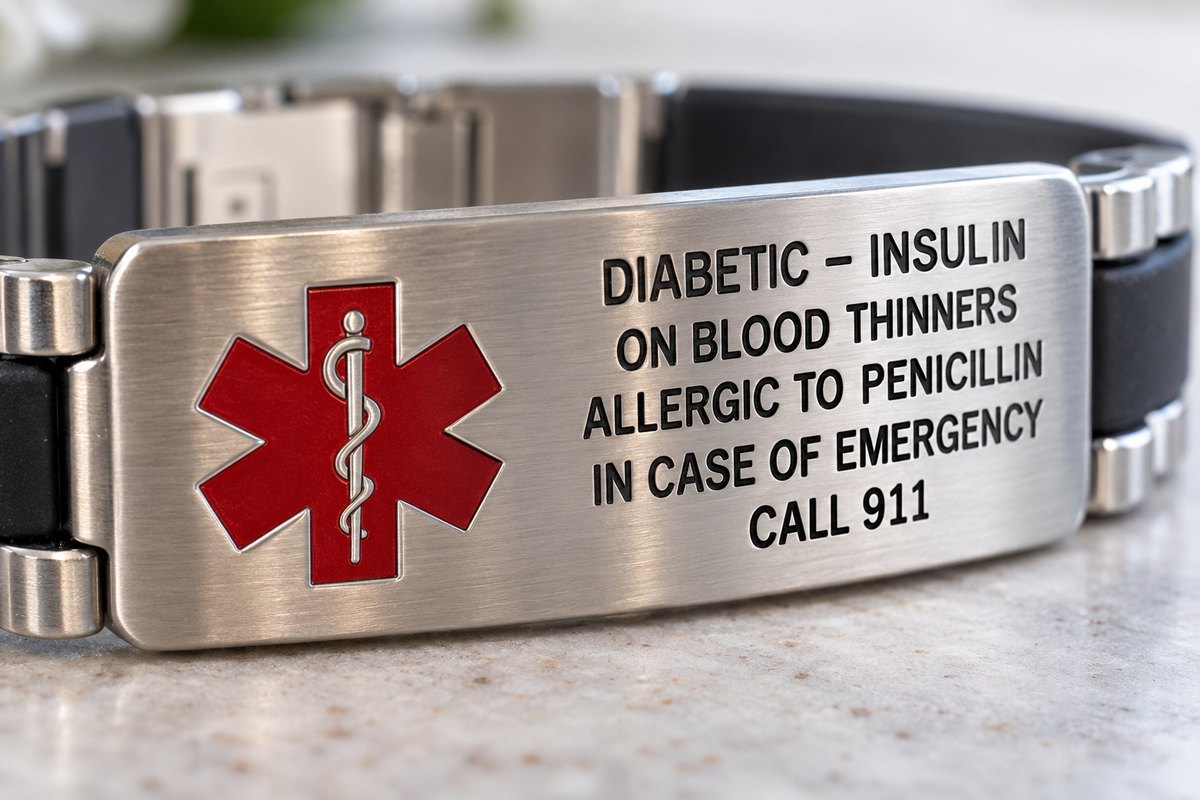
Prioritize the details that a paramedic acts on immediately. A good order is:
- Full name - so responders and hospital staff can identify you.
- Primary medical condition(s) - e.g. "Type 1 Diabetic," "Epilepsy," "Heart condition," "Alzheimer's."
- Serious allergies - especially drug allergies like "Allergic to Penicillin" that change which medications are safe.
- Critical medications - anticoagulants (blood thinners), insulin, or steroids that affect emergency care.
- Implanted devices - "Pacemaker," "Defibrillator (ICD)," or "Insulin pump" so responders avoid harmful procedures.
- Emergency contact (ICE) - a phone number labeled "ICE" (In Case of Emergency).
- Advance directive, if applicable - such as "DNR" (Do Not Resuscitate), if that reflects your documented wishes.
Keep wording short and standard - responders scan for keywords, so "Diabetic - Insulin" is clearer than a full sentence. If you have several conditions, consider adding "See wallet card" and carrying a fuller list.
Not sure which system you need?
Answer a few quick questions and we'll match you with a top-rated provider for a free, no-obligation quote — or compare our top picks yourself.
What to put on it for specific conditions
Some conditions have standard wording worth getting right:
- Diabetes: "Type 1 Diabetic" or "Type 2 Diabetic - Insulin." This tells responders to check blood sugar fast, since a diabetic emergency can look like intoxication or a stroke.
- Blood thinners: "On Blood Thinners" or the specific drug (e.g. "Warfarin," "Eliquis"). This is critical - it warns responders about bleeding risk before any procedure.
- Pacemaker or ICD: "Pacemaker" or "ICD" so responders avoid certain equipment and know your heart rhythm is device-managed.
- Severe allergies: "Anaphylaxis - Bee Stings" or "Allergic to Penicillin," plus "Carries EpiPen" if you do.
- Epilepsy / seizure disorder: "Epilepsy" so a seizure isn't mistaken for something else.
- Cognitive conditions: "Alzheimer's" or "Memory Impaired" with an ICE number, in case the wearer can't answer questions.
Who should wear a medical alert bracelet
A medical alert bracelet is worth wearing for anyone whose safety depends on responders knowing something quickly, including people with diabetes, serious allergies, heart conditions, epilepsy, a pacemaker, dementia, or those taking blood thinners. It's also valuable for seniors who live alone or are at risk of falls. The bracelet speaks for you when you can't - which is exactly when it matters most.
A bracelet vs. a medical alert system
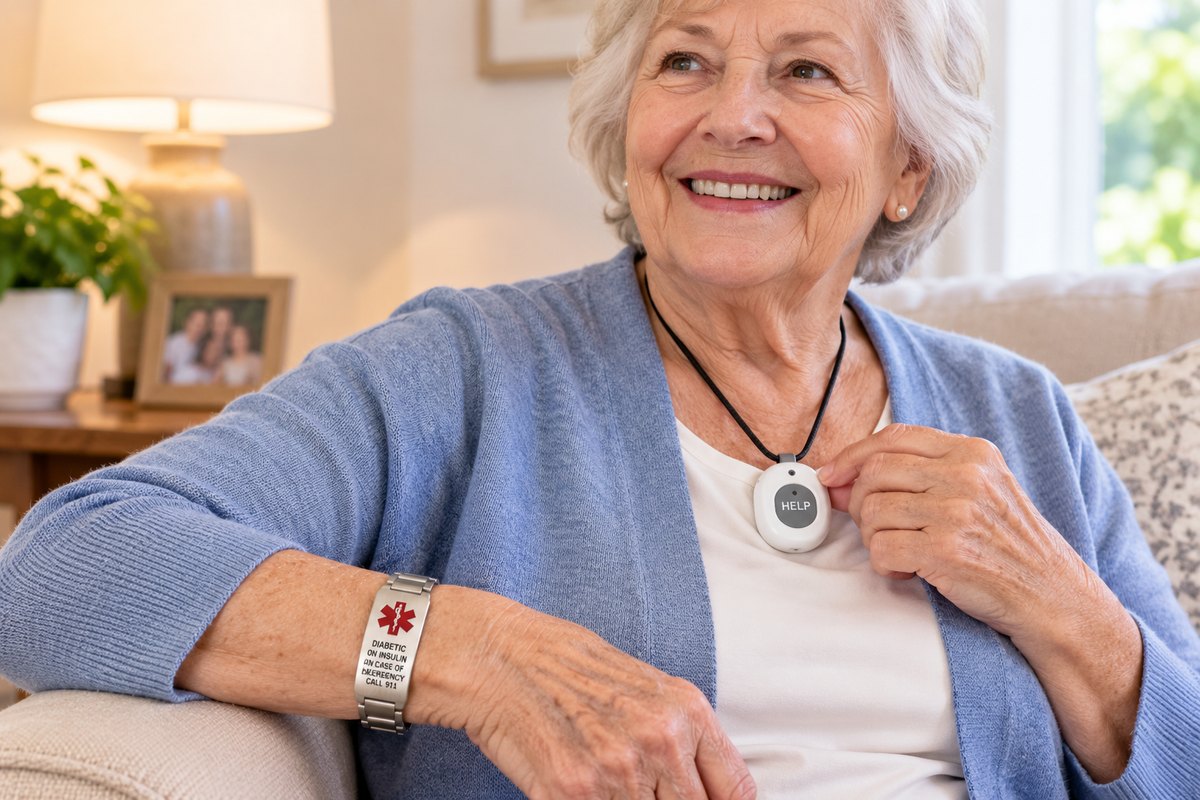
Here's the key limitation: a medical alert bracelet is passive - it shares information, but it can't call for help. If someone falls or has a medical emergency alone, the engraving only helps once a responder is already there.
A medical alert system adds the missing piece: a wearable button (or automatic fall detection) that connects to a 24/7 monitoring center to dispatch help on its own. Many people use both - a bracelet for medical information and a monitored device for actually summoning help. If you're weighing that step for yourself or a parent, see our best medical alert systems comparison and buyer's guide, or get matched free with the right provider.
Want protection that can call for help, not just inform? Answer a few quick questions and we'll match you with a top-rated medical alert provider - free, no obligation.
Get matched freeFrequently asked questions
Who should wear a medical alert bracelet?
Anyone whose emergency care depends on responders knowing something fast - people with diabetes, serious allergies, heart conditions, epilepsy, a pacemaker, dementia, or who take blood thinners, plus seniors who live alone or are at risk of falls. It communicates critical information when you can't speak for yourself.
What should you engrave on a medical alert bracelet?
Engrave the essentials only: your full name, primary medical condition, life-threatening allergies, critical medications (like blood thinners or insulin), any implanted device, and an emergency contact labeled "ICE." Keep wording short and keyword-based so responders can scan it instantly.
What do you put on a medical alert bracelet for a pacemaker?
Engrave "Pacemaker" (or "ICD" for a defibrillator), your name, and an emergency contact. This warns responders that your heart rhythm is device-managed and helps them avoid equipment or procedures that can interfere with the device.
Should you wear a medical alert bracelet for blood thinners?
Yes. If you take anticoagulants, engrave "On Blood Thinners" or the specific drug (e.g. "Warfarin," "Eliquis"). It's one of the most important things to flag, because it warns responders of bleeding risk before any procedure or medication.
Do medical alert systems require internet?
Most modern medical alert systems don't need home internet - they use a cellular signal, so no WiFi or landline is required. In-home units connect over cellular, and mobile devices use cellular plus GPS. See our medical alert buyer's guide for the details.
Are medical alert systems tax deductible?
In some cases. The IRS may allow medical alert or monitoring costs as a deductible medical expense when they're for a diagnosed medical need and you itemize deductions, but rules and limits apply. Confirm with a tax professional for your situation.
Does Medicaid or Medicare cover medical alert devices?
Original Medicare (Parts A and B) generally does not cover medical alert systems, though some Medicare Advantage plans and certain state Medicaid waiver programs may help. Check your specific plan - coverage varies widely.
This guide is general information, not medical or tax advice. Confirm engraving choices with your doctor and coverage with your plan or a tax professional.